Phoenix Insulation Questions Answered: Your Complete FAQ Guide
From spray foam basics to attic R-values and rebate details—get straight answers from Phoenix’s trusted insulation experts
- Home
- FAQ
From spray foam basics to attic R-values and rebate details—get straight answers from Phoenix’s trusted insulation experts
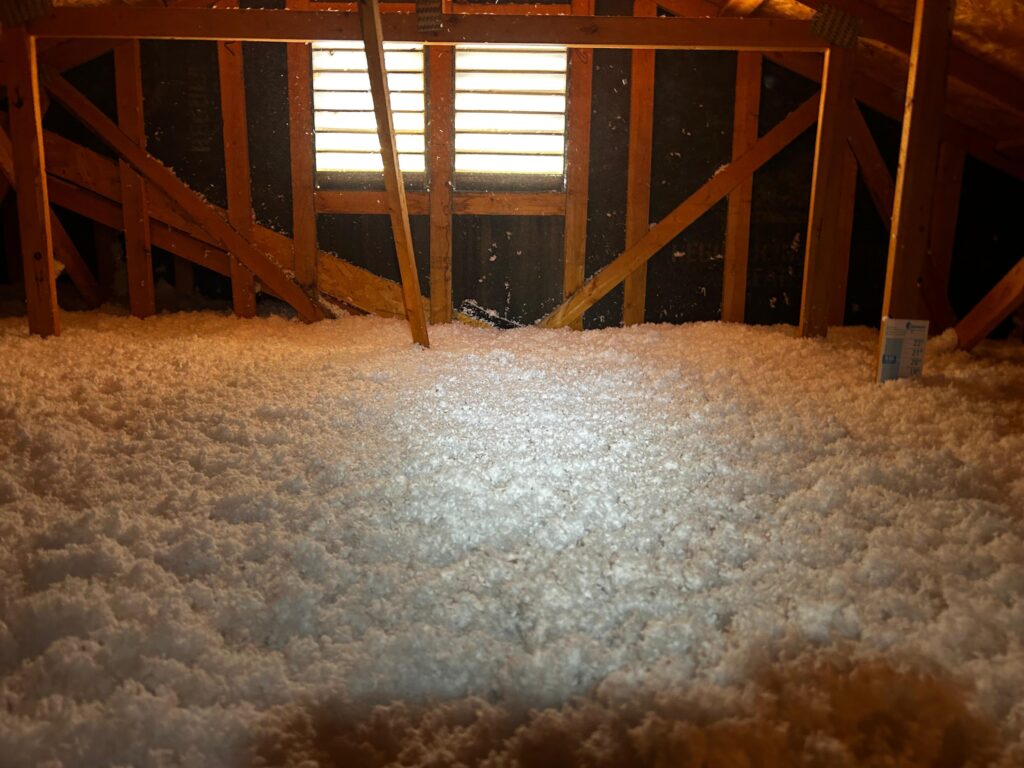
For Phoenix (Climate Zone 2), Energy Star recommends R-38 to R-49 for most attics during retrofit projects. If your attic currently has little to no insulation, we typically recommend upgrading to R-49 (approximately 16-17 inches of blown-in fiberglass). If you already have 3-4 inches of existing insulation, bringing it up to R-38 (around 13-14 inches total) provides excellent performance.
During your free inspection, we’ll measure your current insulation depth and recommend the most cost-effective upgrade path. The right R-value depends on your current condition, HVAC system, and energy goals—there’s no one-size-fits-all answer.
Why it matters in Phoenix: Arizona’s extreme attic temperatures (often 140°F+ in summer) make proper insulation critical for comfort and energy savings. Every additional R-value helps reduce the load on your air conditioning system.
While we can’t guarantee specific dollar amounts (every home is different), properly installed attic insulation combined with air sealing typically reduces cooling costs by 15-30% for Phoenix homes that were previously under-insulated.
The biggest savings come from homes that currently have:
With Phoenix electricity averaging around 15-16¢/kWh, and many Valley homes spending $200-400/month on summer cooling, even a 20% reduction translates to $480-960 in annual savings. Most homeowners see ROI within 3-5 years, especially when combined with available APS or SRP rebates.
Real numbers example: A 2,000 sq ft home upgrading from R-11 to R-49 typically sees 1-3 degree indoor temperature improvement and measurably lower AC runtime.
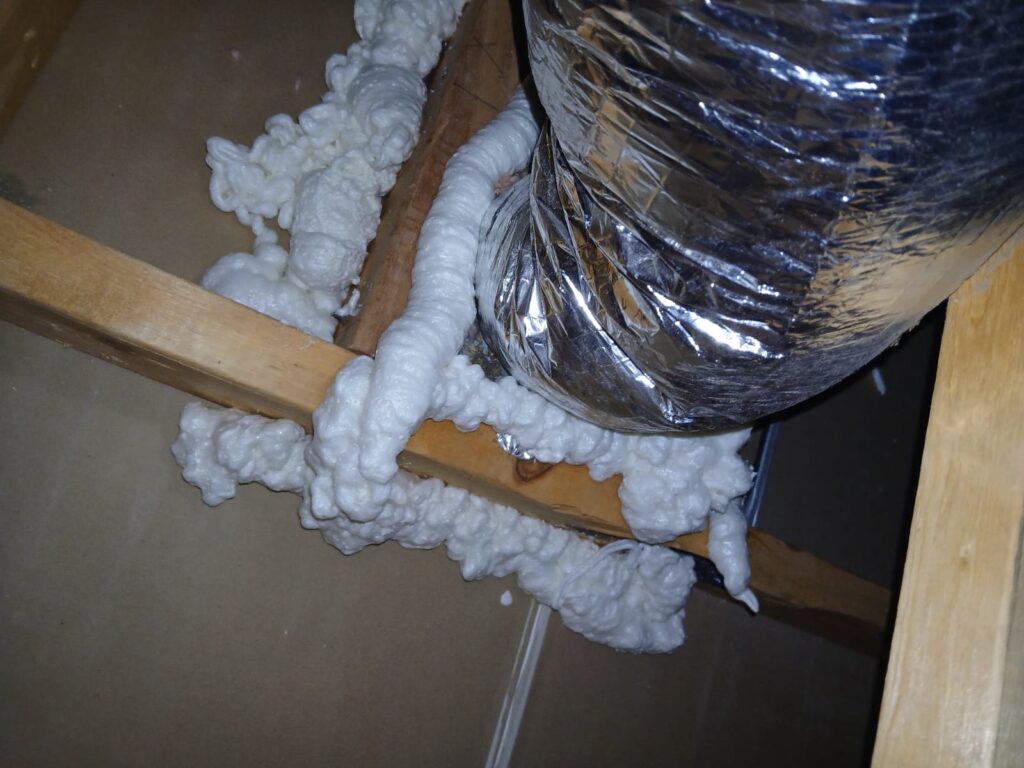
Spray Foam Insulation:
Blown-In Fiberglass (our most common attic solution):
Batt Insulation:
Bottom line for Phoenix homes: For attic upgrades, we most often recommend blown-in fiberglass because it fills all gaps, is verifiable with depth markers, and provides excellent performance at the best value. Spray foam shines when you’re encapsulating a roofline or need both insulation and air sealing in complex spaces.
It depends on three factors:
Remove old insulation if:
Top-off existing insulation if:
Our recommendation for Phoenix attics: We typically suggest the full sequence (Remove → Air Seal → R-30 or higher) because:
Pricing transparency: Removal is $1.20/sq ft, air sealing is $250 per 2,000 sq ft minimum, and re-insulation to R-30 averages $1.15/sq ft—or we offer the complete package at $2.95/sq ft (Remove + Air Seal + R-49).
Note: All removal estimates assume full attic access; final pricing confirmed after in-person inspection.
Phoenix-specific considerations: Attic heat and UV exposure don’t typically degrade modern fiberglass or spray foam. The biggest threats to insulation longevity in Arizona are:
Maintenance tip: We recommend a visual inspection every 5 years, especially after roof work or pest control treatments. Our free attic inspections include depth checks and photos so you know exactly what you have.
| Feature | Open-Cell Spray Foam | Closed-Cell Spray Foam |
|---|---|---|
| R-value per inch | ~R-3.6–3.9 | ~R-6–7 |
| Density | Low (~0.5 lb/ft³) | High (~2 lb/ft³) |
| Air sealing | Excellent | Excellent |
| Moisture barrier | Semi-permeable | Excellent vapor barrier |
| Cost | Lower | Higher |
| Best for | Interior rooflines, sound dampening, large areas | Limited-depth cavities, moisture control, structural rigidity |
For Phoenix homes:
Code compliance note: All spray foam applications must meet fire/ignition barrier requirements per IRC—this is factored into our installations.
Absolutely—but the application method matters.
Two approaches:
Option 1: Roofline Encapsulation (most common for spray foam)
Option 2: Attic Floor (less common)
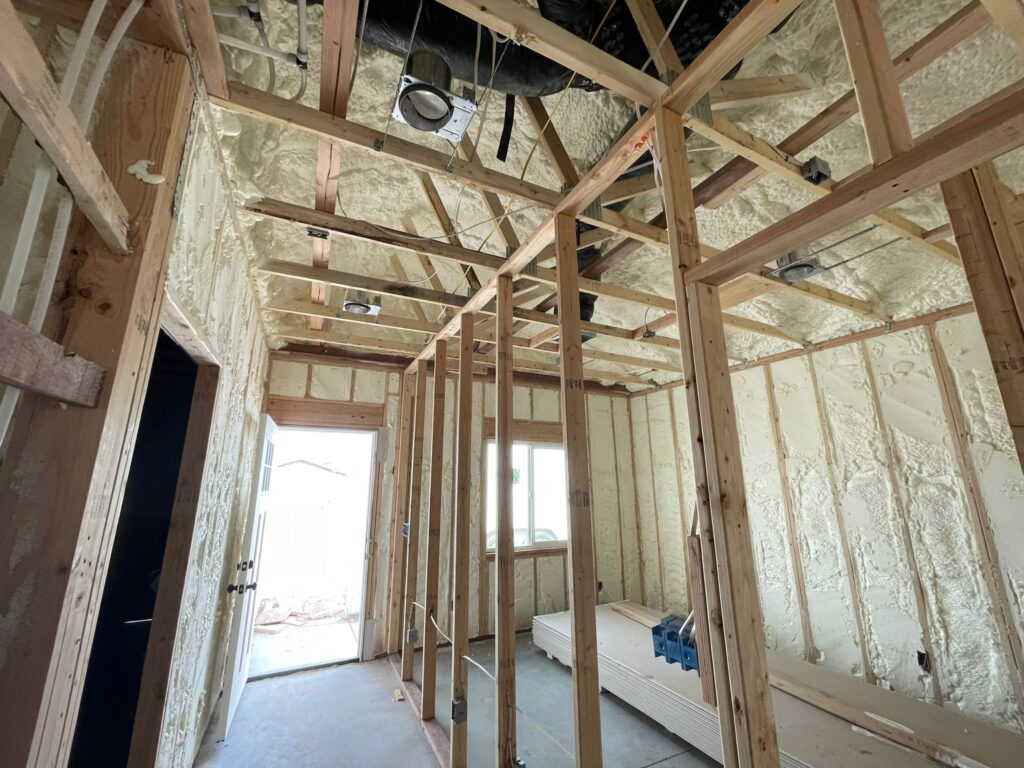
Important Phoenix consideration: If you have ductwork in your attic, roofline encapsulation with spray foam can be a game-changer. Instead of ducts sitting in 140°F+ attic temps, they’re in a space that stays much closer to your indoor temperature—dramatically improving HVAC efficiency.
Pricing: Spray foam is quoted after site assessment because every roofline is unique. Request your free estimate and we’ll walk you through whether spray foam, blown-in, or a combination approach is best for your home.
Yes—when properly installed by trained professionals, spray foam insulation is safe.
Installation safety:
Post-installation:
Third-party certifications: Most spray foam products carry GREENGUARD certifications and meet EPA indoor air quality standards post-cure.
Phoenix-specific concern: In extreme attic heat (140°F+), properly installed spray foam remains stable and does not break down or release odors. Poor installation or wrong products can cause issues—which is why hiring experienced, licensed contractors matters.

Hot rooms in Phoenix homes usually come from one (or more) of these attic issues:
1. Insufficient insulation:
2. Air leakage (bypasses):
3. Duct leakage:
4. West-facing rooms or cathedral ceilings:
The fix: Our recommended sequence is:
Most Phoenix clients see 1-3 degree temperature improvements in problem rooms within the first cooling cycle after a proper attic upgrade.
Using our preferred product (Knauf Jet Stream Ultra blown fiberglass):
Pricing based on R-value targets:
Example for a 1,500 sq ft attic:
Which should you choose?
Cost-benefit: The difference between R-38 and R-49 is about $450 for a 1,500 sq ft attic. Given Phoenix’s extreme cooling demands, we generally recommend R-49 for maximum long-term savings and comfort—especially for homes with high summer electric bills.
Coverage verification: We use depth markers and take photos at multiple locations to verify proper installation thickness. You’ll receive documentation showing coverage meets the target R-value.
Yes, but carefully—and with proper precautions:
Short answer: You can walk on attic joists after blown-in insulation is installed, but:
Caution: Stepping between joists can damage drywall ceilings below and compress insulation (reducing R-value in that area). Many Phoenix homes have 16″ or 24″ joist spacing with only ½” drywall between.
Best practice: If you need regular attic access for storage or HVAC service:
Storage concern: Deep insulation (13-17″ for R-38/R-49) makes attic storage challenging. Many Phoenix homeowners prioritize energy savings over storage space, but decking platforms can provide both.
It can—but air sealing is the key, not just insulation thickness.
Why Phoenix homes get dusty:
How our process addresses dust:
Realistic expectations: Proper air sealing + insulation upgrade reduces dust infiltration from attics, but won’t eliminate all dust sources (outdoor air, HVAC filter quality, pet dander, etc.). Most clients notice a meaningful reduction in dust accumulation, especially on ceiling registers.
Bonus benefit: Less dust infiltration often means better indoor air quality and reduced allergen exposure.
Our removal process is designed to be thorough, clean, and safe:
Step-by-step:
Time frame: Most Phoenix attics (1,200-2,000 sq ft) take 2-4 hours for removal.
What we find: During removal, we often discover:
Pricing: $1.20/sq ft for standard attic removal (minimum attic access required; final estimate verified in person)
Next steps: Once removed, we perform air sealing before re-insulating (you cannot effectively air seal with insulation in place).
Air sealing is the process of sealing gaps and penetrations between your conditioned living space and unconditioned attic—and it’s arguably more important than insulation itself.
What we seal:
Why it matters:
Our approach:
Pricing: $250 per 2,000 sq ft (minimum), with proportional increases for larger attics.
Why we require removal first: You cannot properly identify or seal all bypasses with 6-17 inches of insulation covering them. Removal → Air Seal → Re-insulate is the only sequence that delivers full performance.
Rebate bonus: SRP rebates specifically require air sealing combined with insulation upgrades (up to $600 total).
Common signs:
Phoenix-specific risks:
What we check during free inspections:
If contamination is found:
Health concern: Rodent droppings can carry Hantavirus and other pathogens—we use PPE and containment methods to minimize exposure risk during removal.
Peace of mind: Starting with a clean attic ensures your new insulation stays pristine for decades.